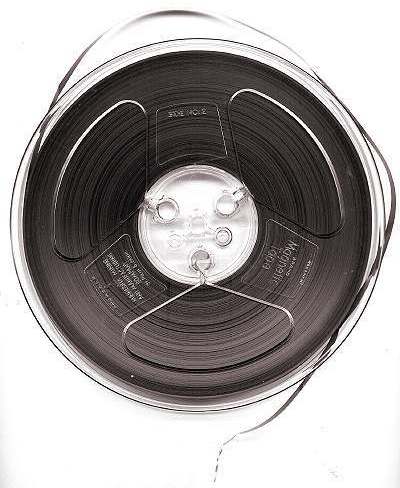
Magnetic Tape: 1928
Made of a thin magnetizable coating on a long, narrow strip of plastic film. It was invented in Germany by a man named Fritz Pfleumer in 1928.
The Vinyl disc, or gramophone record, is an analog sound storage medium in the form of a flat polyvinyl chloride disc with an inscribed, modulated spiral groove. The groove usually starts near the edge of the disc and ends near the center. The sound is picked up by a needle being placed in the groove and following it towards the center of the disc. DJ's started to create music using these by scratching them on a set of vinyl decks in time with the songs from the actual disc.

Compact Cassette: 1963
The compact cassette or 'cassette tape' is a magnetic tape recording format that can come in two forms, either already containing content as a pre-recorded cassette or as a fully recordable 'blank' cassette. It consists of two miniature spools and a magnetically coated plastic tape is passed and wound between them.

CD: 1982
CD or compact disc is a digital optical disc data storage format. Standard CD's have a diameter of 4.7 inches and can hold up to 80 minutes of uncompressed audio. In 2004 the sales of CD's reached about 30 billion discs and 200 billion CD's had been sold by 2007 worldwide. Although they are now being beaten by digital formats such as MP3. DJs later started to use CDs in the same manner as vinyls by scratching them.

Mini Disc: 1992
The MiniDisc is an obsolete magneto-optical disc based data storage device that can gold up to 80 minutes of digital audio or 1 gigabyte of Hi-MD data. MiniDisc was created by Sony in September 1992 and was first released in Japan and then later in the USA. Sony announced that they will cease to make any more MiniDiscs in early 2013. Musicians started to use this as a mastering format.

MP3: 1999
MP3 is an encoding format for digital audio which uses a form of lossy data compression. It is a common audio format for consumer audio streaming or storage. It is an audio specific format that was designed by the Moving Picture Experts Group (MPEG) as part of its MPEG-1 standard and later extended in MPEG-2 standard. The use in MP3 of a lossy compression algorithm is designed to greatly reduce the amount of data required to represent the audio recording and still sound like a faithful reproduction of the original uncompressed audio for most listeners. Many musicians now make their music available for free.

